Woods & Shrubs
Revamping herbal cosmetics product design and cultural brand identity.
Graphic Designer
June 2025 - July 2025 (2 months)
Adobe Illustrator
Adobe Photoshop
Adobe Lightroom
Figma
Graphic Design
Branding
Market Research
Project Management
Overview
Background
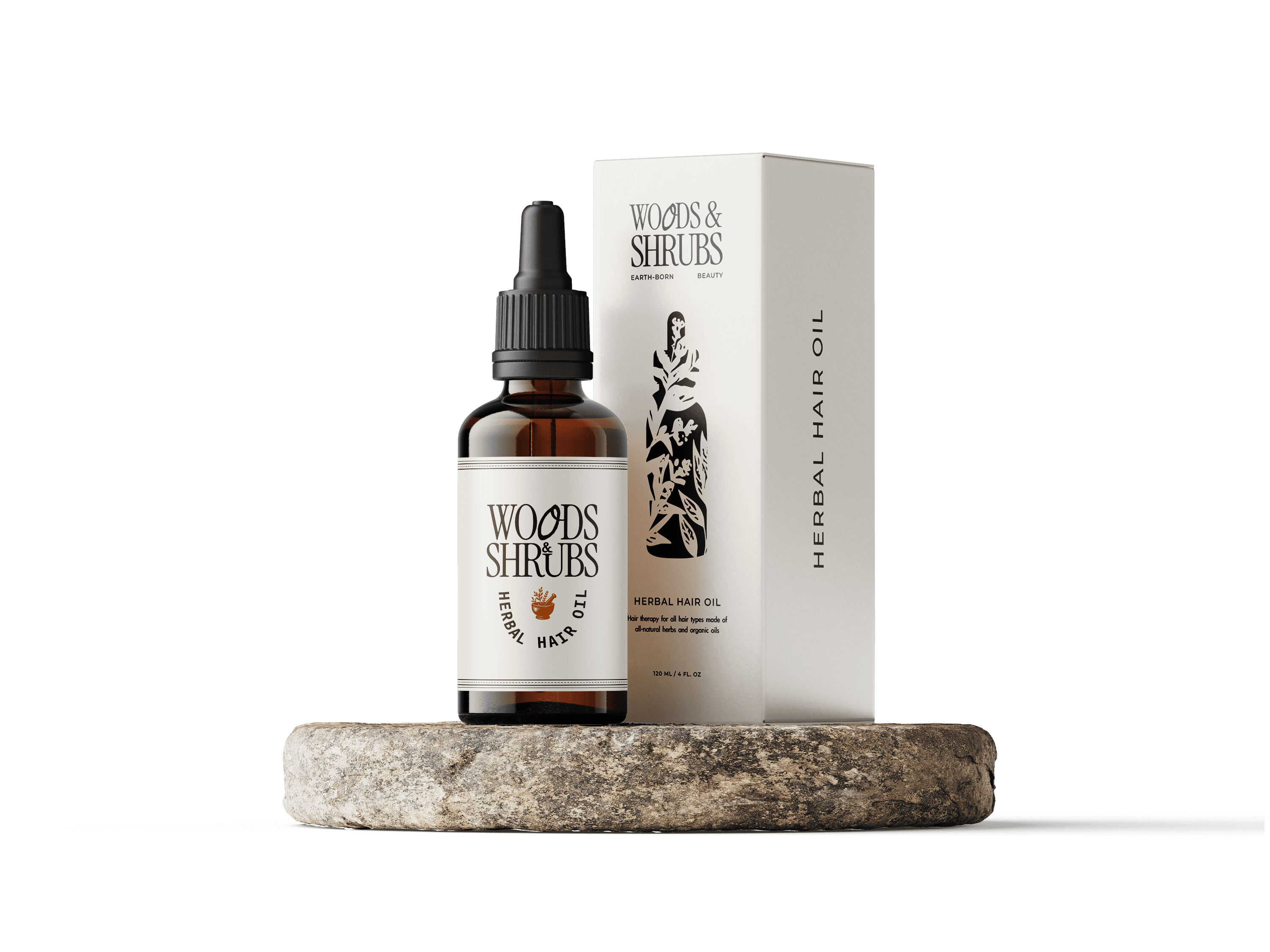
Woods & Shrubs is a family-owned herbal cosmetics company rooted in generations of knowledge, practice, and reverence for nature. Originally launched in a modest mom-and-pop shop in South Asia, Woods & Shrubs now enters the international stage, offering a new identity that honors its roots while bringing ancestral herbal wisdom to consumers across the U.S.
Challenge
Position an international mom-and-pop shop for successful entry and growth in the Western cosmetics market via creative redirection.
Despite having a loyal customer base in South Asia, Woods & Shrubs lacks visibility and brand recognition in the U.S. market. Expanding internationally requires more than just introducing products—it means building trust, communicating cultural significance authentically, and crafting a brand identity that would resonate with a new, diverse consumer base while maintaining the integrity of heritage.
Opportunity
Design a modern brand identity that proudly embraces heritage and will be applied to the company's premier product and digital presence.
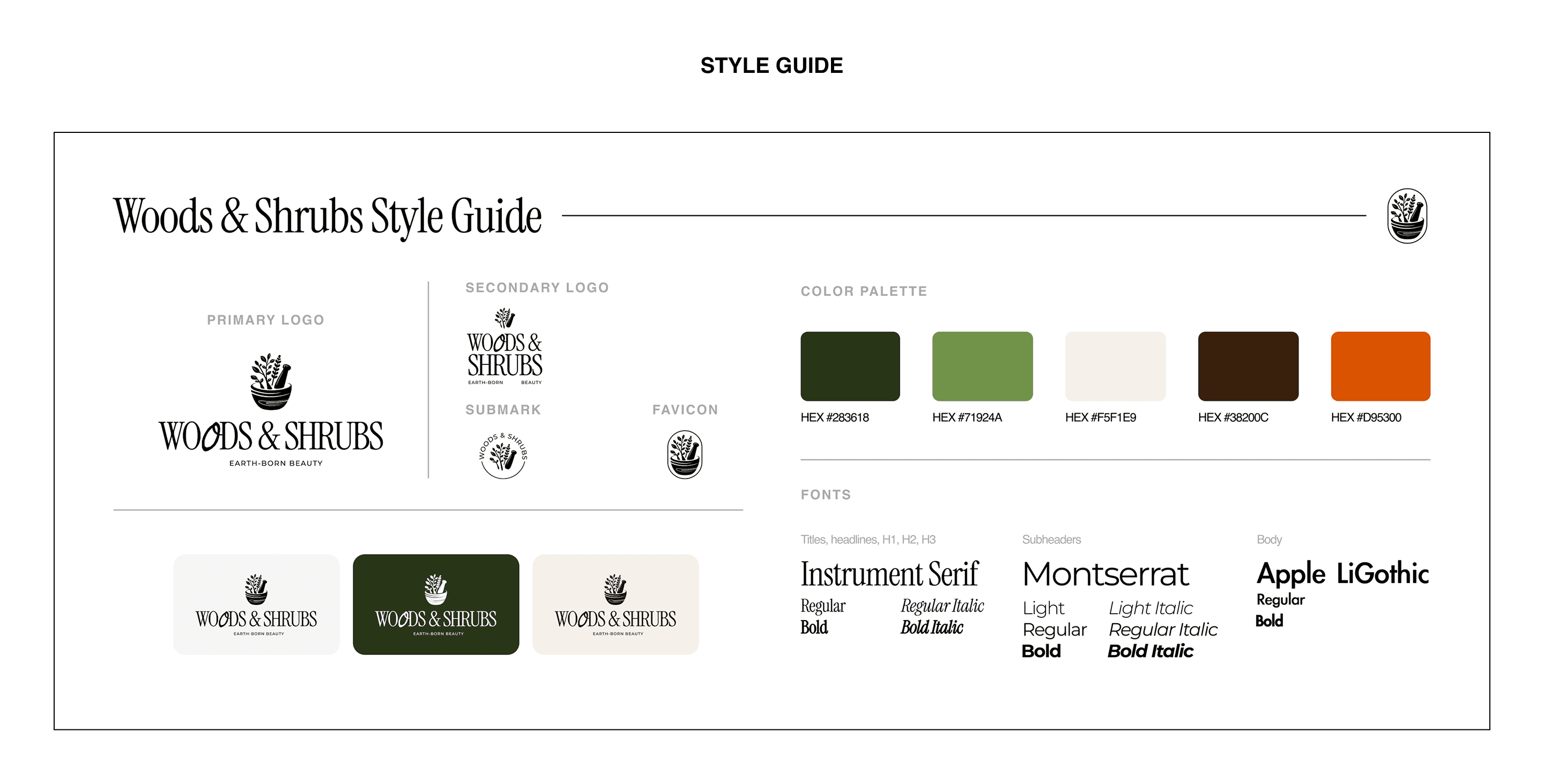
Firstly, I established a solid style guide adequately reflecting the sentiment behind the company. I conducted interviews with the company CEO to compose an authentic background behind his mission and values. This style guide includes a new logo with various logotypes, a consistent color palette, and typography system that evoke natural earth tones and textures, symbolizing both tradition and sustainability.
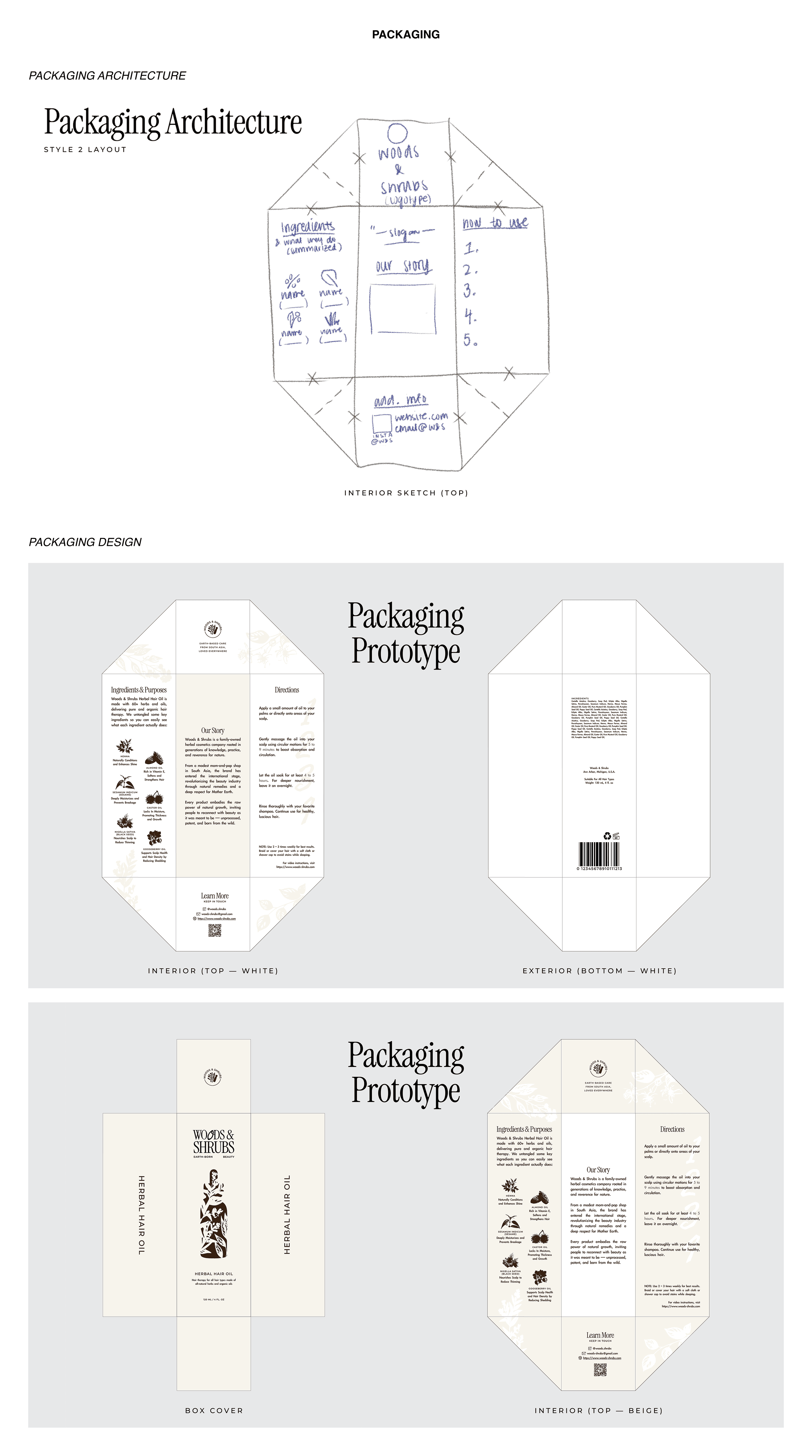
After receiving approval for the style guide, I researched various minimalist, eco-conscious packaging designs that highlight transparency (ingredients, sourcing) while maintaining a premium aesthetic. Packaging architecture and label designs were also considered in this process to distinguish the product from that of competitors.
To produce promotional infographics, I used these various visual elements in tandem with the founder’s cultural narratives. By highlighting generational knowledge, sourcing origins, and the company’s environmental commitments, I aimed to execute a brand identity that celebrates ancestral knowledge while maintaining a modern, luxurious feel for potential customers.
Process
Project Process
Research
Identifying Problems
Desk Research
Interviews
Synthesis
Pain Points
User Persona
User Needs
Ideation
Moodboard
Style Guide
Iterations
Final Designs
Digital Mockups
Prototyping
Deliverables
Reflections
Further Explorations
Research
User Research
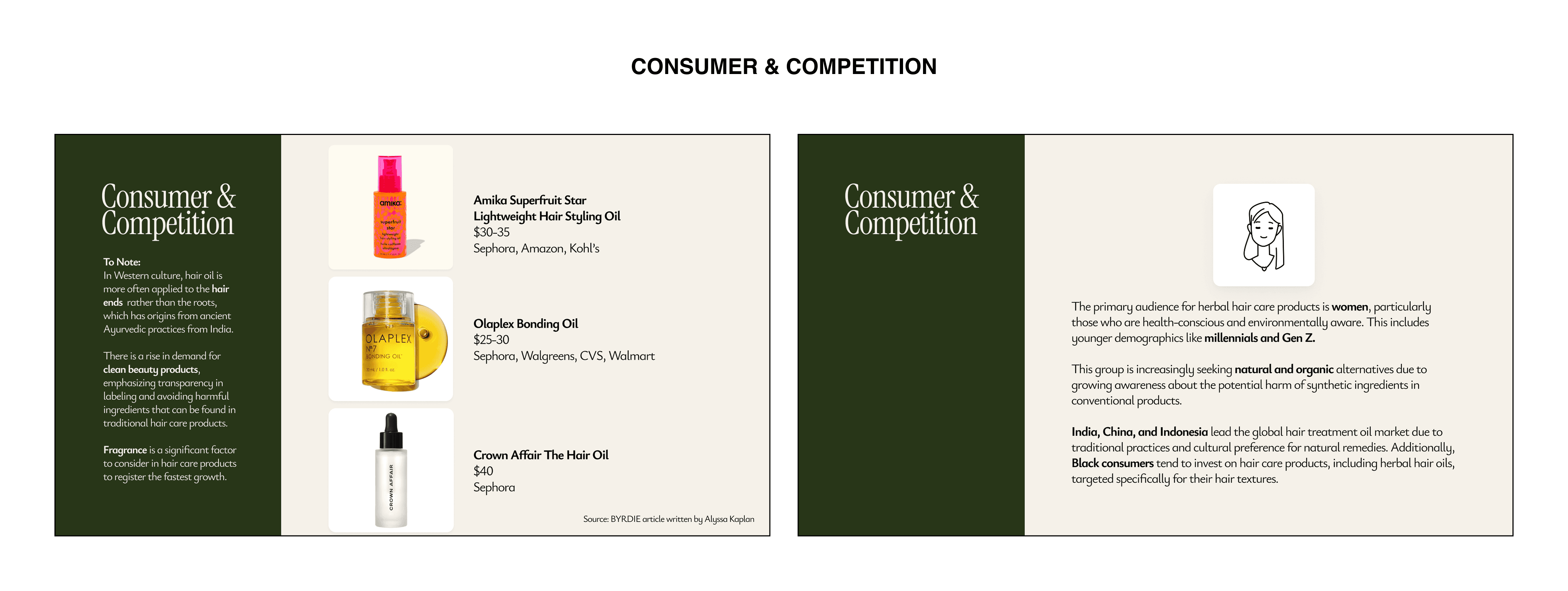
Conducted market analysis on U.S. herbal and clean beauty markets, identifying trends in natural skincare, consumer demand for authenticity, and the rising influence of wellness-focused branding
Competitively reviewed existing "natural brands" to identify gaps in brand storytelling, packaging, and online presence
Explored how heritage-based beauty brands balance authenticity with modern aesthetics when entering Western markets
Synthesis
Research Takeaways
U.S. consumers are drawn to natural skincare brands that have authentic cultural roots and transparent ingredient sourcing.
While storytelling adds sentiment and credibility, visual branding and packaging must appeal to global standards of design and usability.
Ingredient clarity, sustainability practices, and storytelling about South Asian hair-oiling practices are critical in building trust with first-time U.S. buyers.
With no established storefront presence in the U.S., Woods & Shrubs’ entry must prioritize a digital-first strategy—website, social media, and e-commerce outlets.
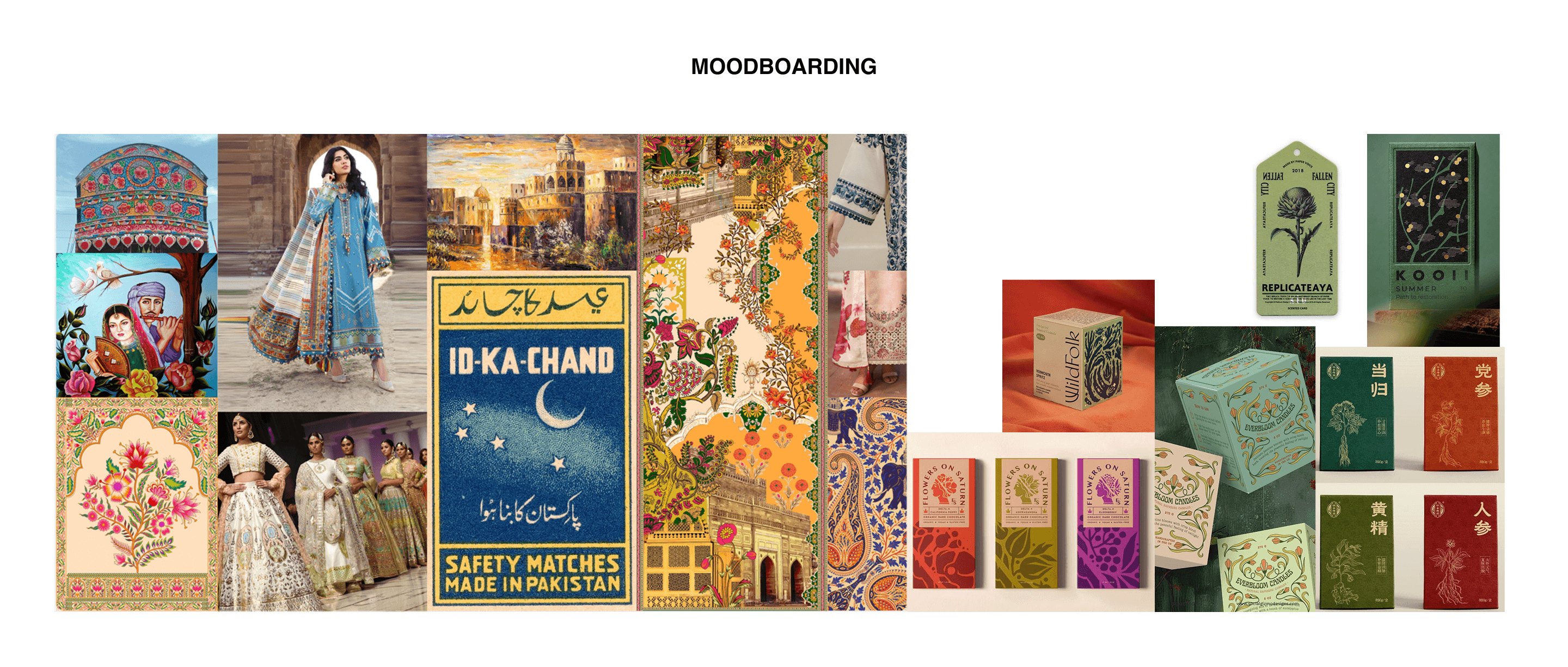
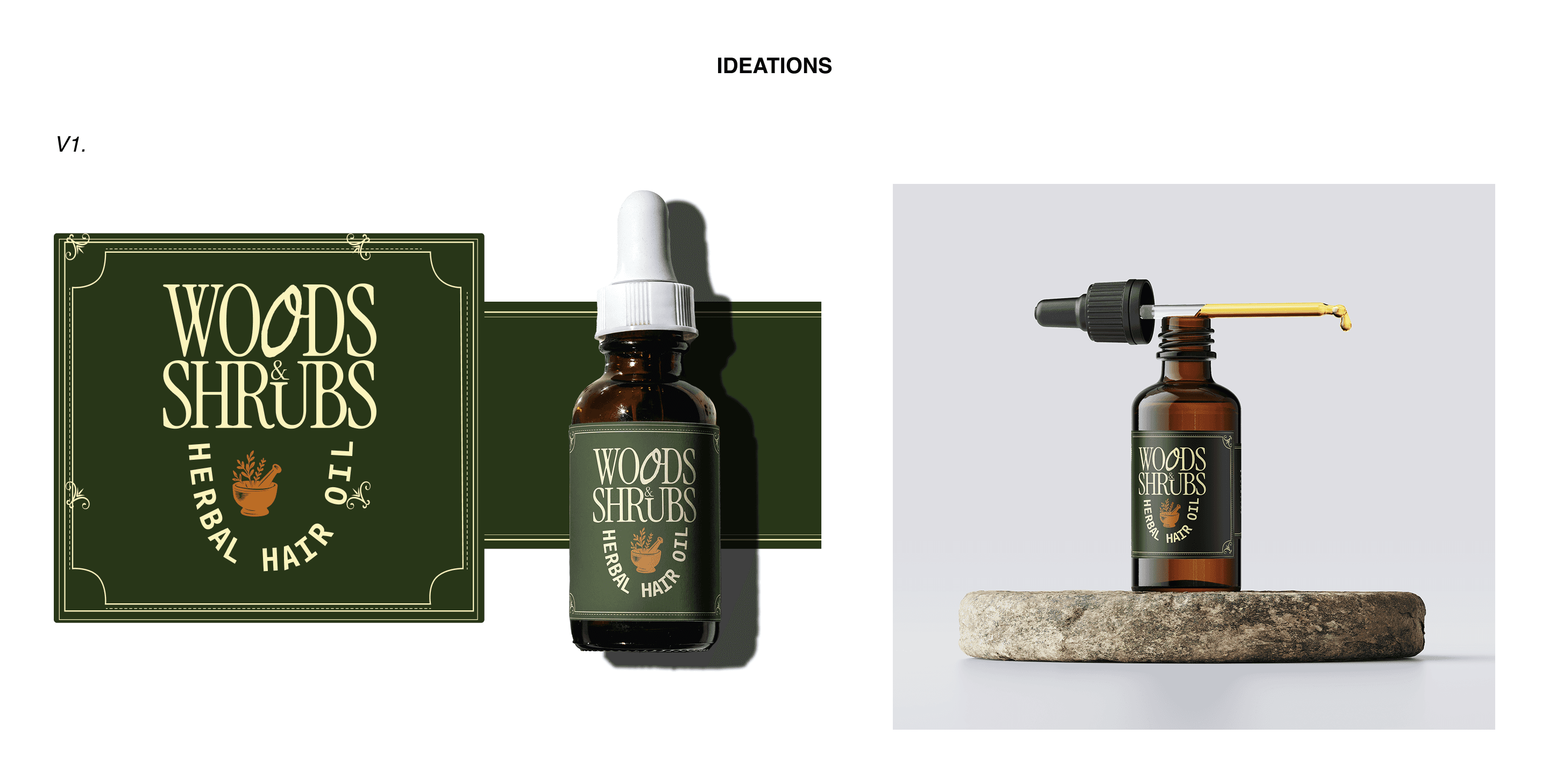
To reimagine Woods and Shrubs’ brand identity while incorporating these takeaways, I researched South Asian art to inform the visual direction—drawing from its color palettes, motifs, and techniques. As a result, I approached the company's aesthetic by blending traditional richness with a contemporary style when visualizing the brand identity and first label design.
Ideating
Ideation
After meeting with the client, I received and implemented the following pieces of feedback:
The manufacturer suggested a minimalistic label and packaging style given the product's novelty as the company's first launch. A colorful style could be saved for limited edition campaigns.
A key aspect behind this product's success in the marketplace should be its appeal to college students as well as a differentiating feature.
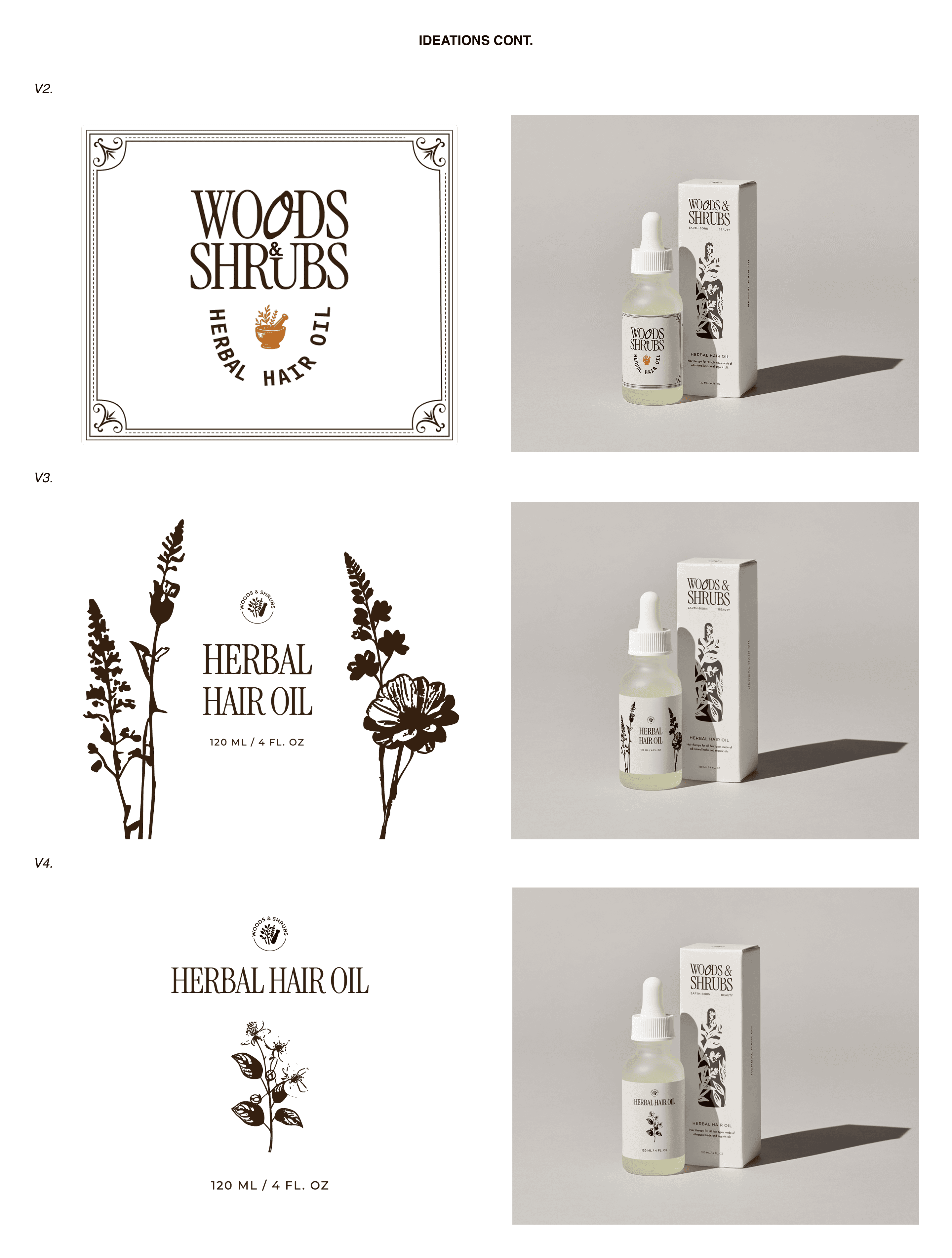
To approach these points, I translated the main themes of my previous design—South Asian-inspired embellishments, color palettes, font qualities—into a minimalistic style, designing three iterations to be considered by the client.
To make Woods and Shrubs' herbal hair oil into a particularly attention-catching and unique hair oil product for college students, I took to a foldable box architecture design that was externally minimalistic and would be flattened upon unraveling the box to reveal information in a visually interesting way. The internal surface outlined South Asian hair oiling instructions while transparently informing users of the product's ingredients and simplifying its respective individual purposes.
These key design features not only produced a comprehensive bottle label and packaging container but also an immersive experience for consumers to become well educated in the natural and cultural essence of the product.
Final Designs
Final Designs
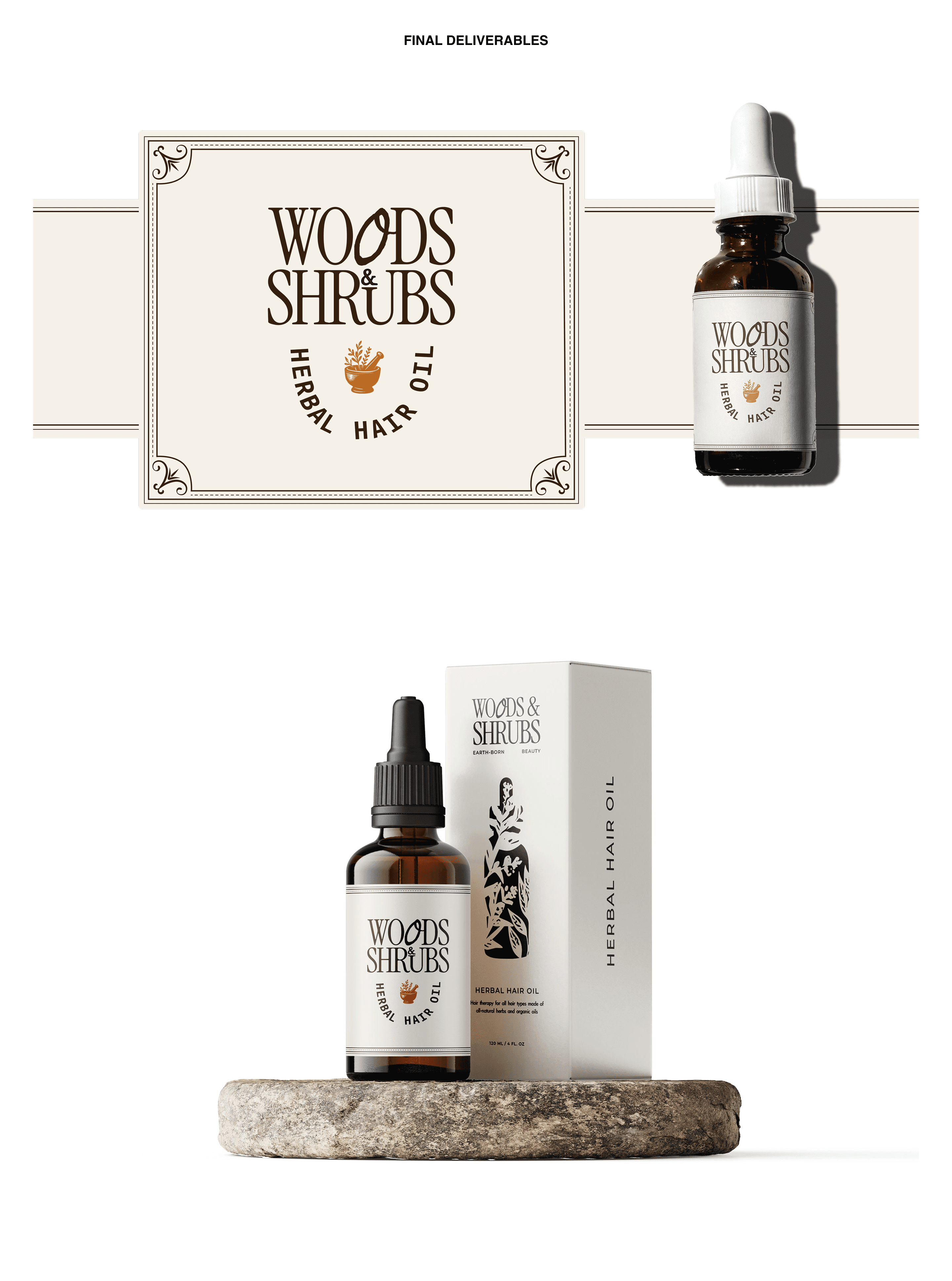
The second iteration—encompassing an iteration of the secondary logo, a simplistic accent logo and product description, and border embellishments—was selected as the final design.
Product Demo
VIDEO DEMO
Reflections
You don’t have to reject modernity, you can integrate it into tradition.
This project challenged me to think critically about how cultural heritage can be translated into modern branding without diluting its authenticity. I spent a decent amount of time researching South Asian design and attempting to integrate its various aspects, including color, artistic styles, etc. to ensure the brand honors its roots while appealing to new audiences.
Aesthetics build a feeling.
Woods & Shrubs has deepened my understanding that brand storytelling is a much stronger strategic tool than many may anticipate. While researching larger companies within the natural cosmetic field, I found that many utilized visuals, language, and feel to establish their brand rather than relying on product photography. Aesthetics play a major role in establishing one’s place within a competitive market. Good design, however, is not only consistent aesthetics—it should bridge and create a community of shared experience.
Where there lacked collaboration, my autonomy filled the gap.
Meeting weekly with the founder was incredibly valuable to my learning experience as a mentee. Despite the initial ambiguity of my mentorship, I was given immense liberty both creatively and organizationally. I exercised independent direction, taking ownership of design decisions and bringing my own perspective to the project. This balance between collaboration and autonomy gave me confidence in both my creative instincts and my ability to communicate them effectively. Additionally, I gained insight into the vision and values driving the company, while also practicing how to present deliverables clearly and persuasively.
Going forward
As Woods & Shrubs continues to establish its presence in the U.S., I hope to remain involved in supporting the brand’s growth as the founder’s story resonated strongly with my own as a second-generation immigrant. My goal is to strengthen the company’s digital presence by helping develop and design its website, optimizing e-commerce functionality, and building a cohesive social media strategy that highlights both products and cultural storytelling.