BACK
An uplifting, revamped website that streamlines free college application mentorship to underprivileged NYC high school students.
Role & Client
Website Designer
Duration
July 2025 (1 month)
Tools
Figma
Framer
Adobe Illustrator
Adobe Photoshop
Skills
UX Research
Interaction Design
Graphic Design
Prototyping
OVERVIEW
Background
Unity Scholars Network offers free college admissions mentorship for low-income high school students based in New York City. Through accessible peer mentorship, USN bridges equity gaps with holistic guidance from current undergraduate students at Top 50 universities.
Challenge
Students from lower socioeconomic backgrounds often miss out on life-changing college opportunities—not because they’re unqualified, but because they have lack access the right resources. The existing website was reportedly difficult to navigate, proving to be a barrier to the organization’s resources and services.
Opportunity
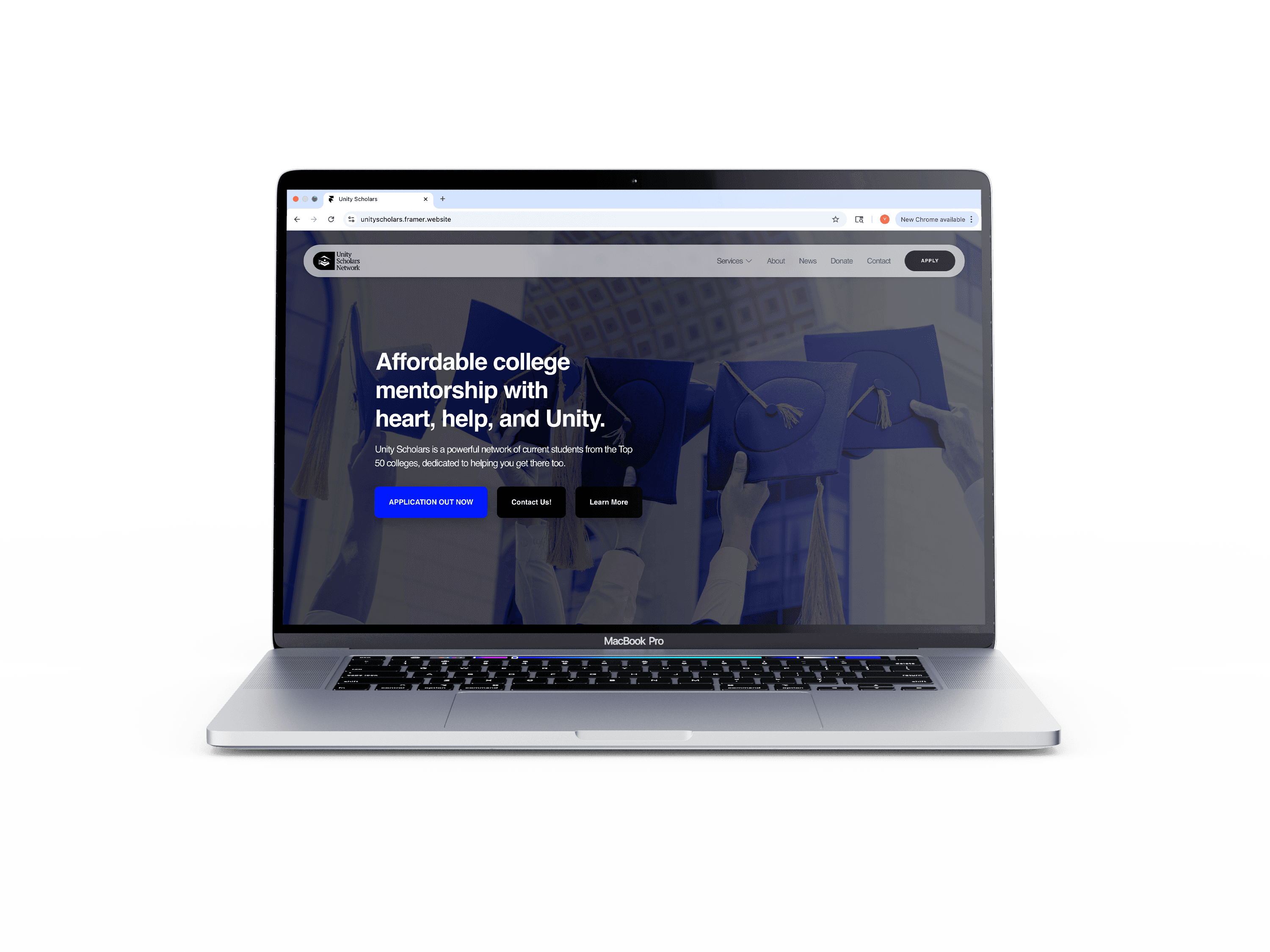
Design a revamped website that emphasizes streamlined navigation and caters to high school students to aid the organization's humanitarian mission.
By redesigning Unity Scholars Network’s website with an emphasis on clarity, accessibility, and storytelling, the new design highlights the organization’s mission through strong visuals, streamlined navigation, and condensed content.
Process
Project Process
Research
Identifying Problems
Desk Research
Interviews
Synthesis
Pain Points
User Persona
User Needs
Ideation
Moodboard
Style Guide
Low-Fidelity
Final Designs
High-Fidelity
Prototyping
User Testing
Reflections
Further Explorations
Research
User Research
Stakeholder interviews with the CEO, program coordinators, mentors, and high school students to directly gauge organizational goals, values, and internal challenges with engagement.
Competitive analysis of other mentorship and student-based nonprofit websites to evaluate standardized features of consultation services, content hierarchy of persuasive information, and system flows with appealing interactions.
Synthesis
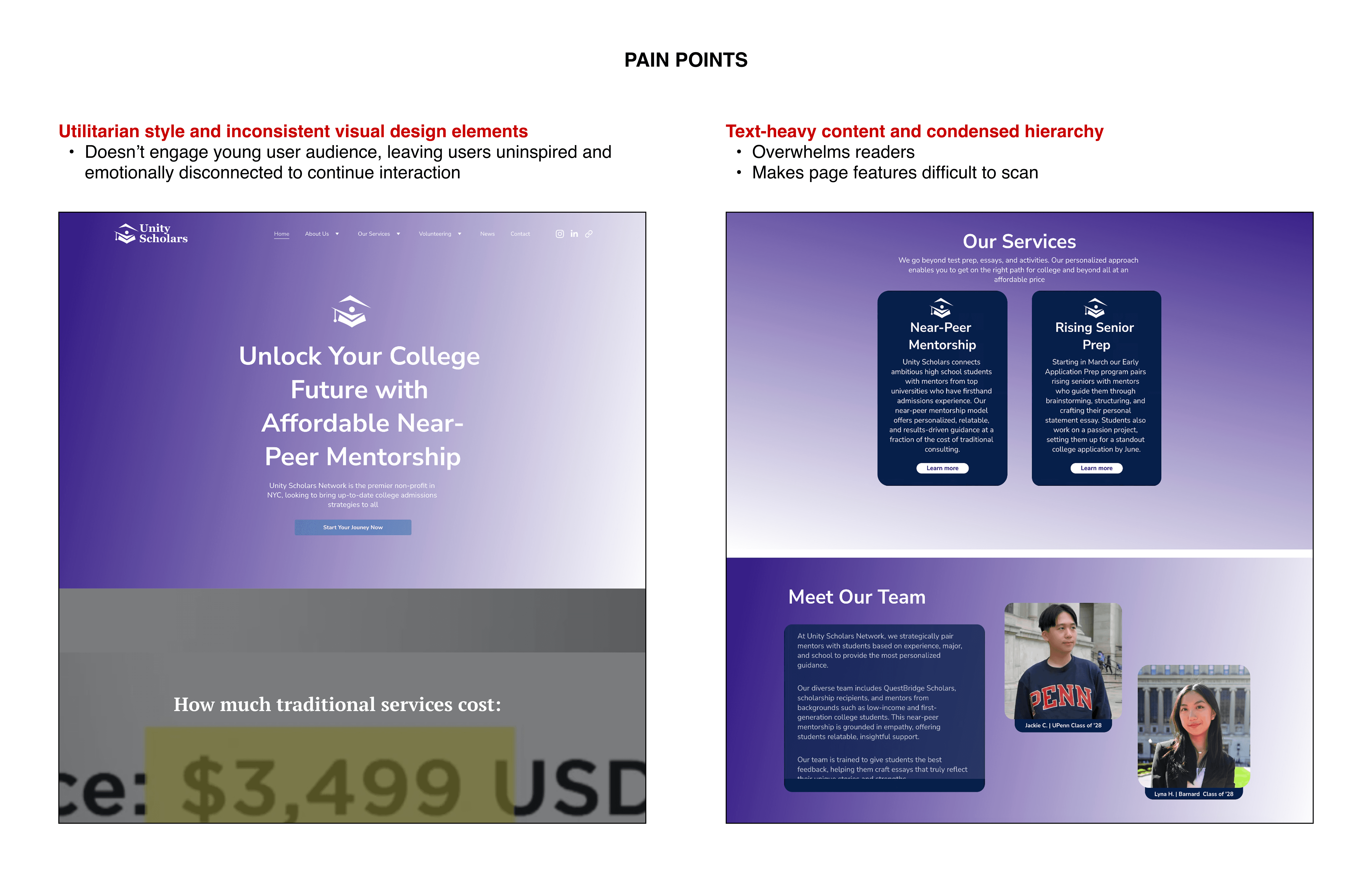
Stakeholder interviews helped identify pain points with the old site, narrowing down three target issues:
Lack of visual appeal hindered motivations for prolonged engagement
Unclear program benefits and structural information, and
Difficulties navigating forms like applications and donor platforms.
My takeaways were as follows:
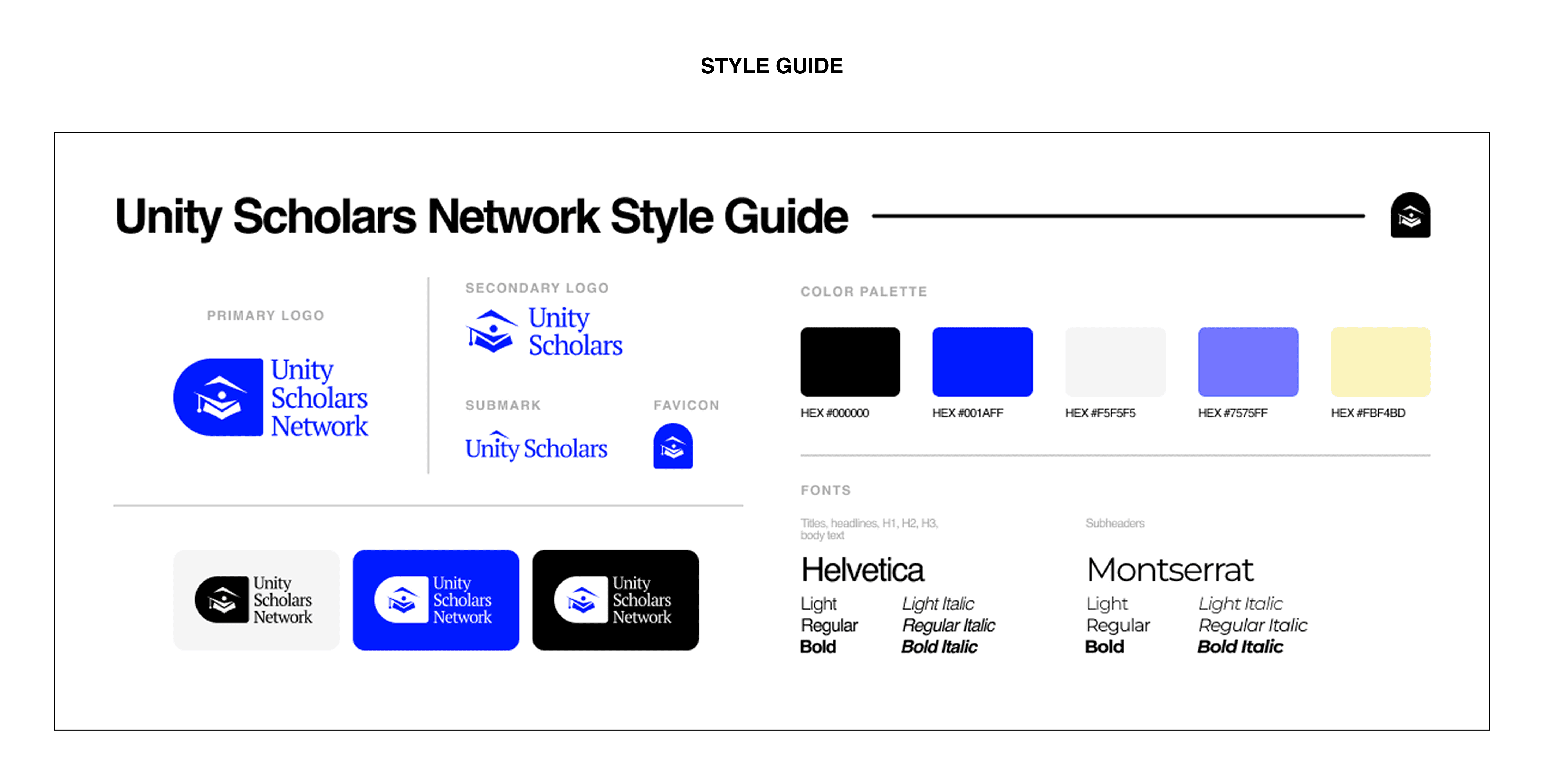
Establish a suitable style guide and ensure consistency across the website's visual elements to enhance appeal, maintain engagement, and improve perceived user experience.
Re-evaluate the content hierarchy and revise text to highlight key points in a concise, yet informative manner, clarifying program benefits.
Replace the existing interest form with an embedded application form to streamline form navigation.
Ideating
Ideation
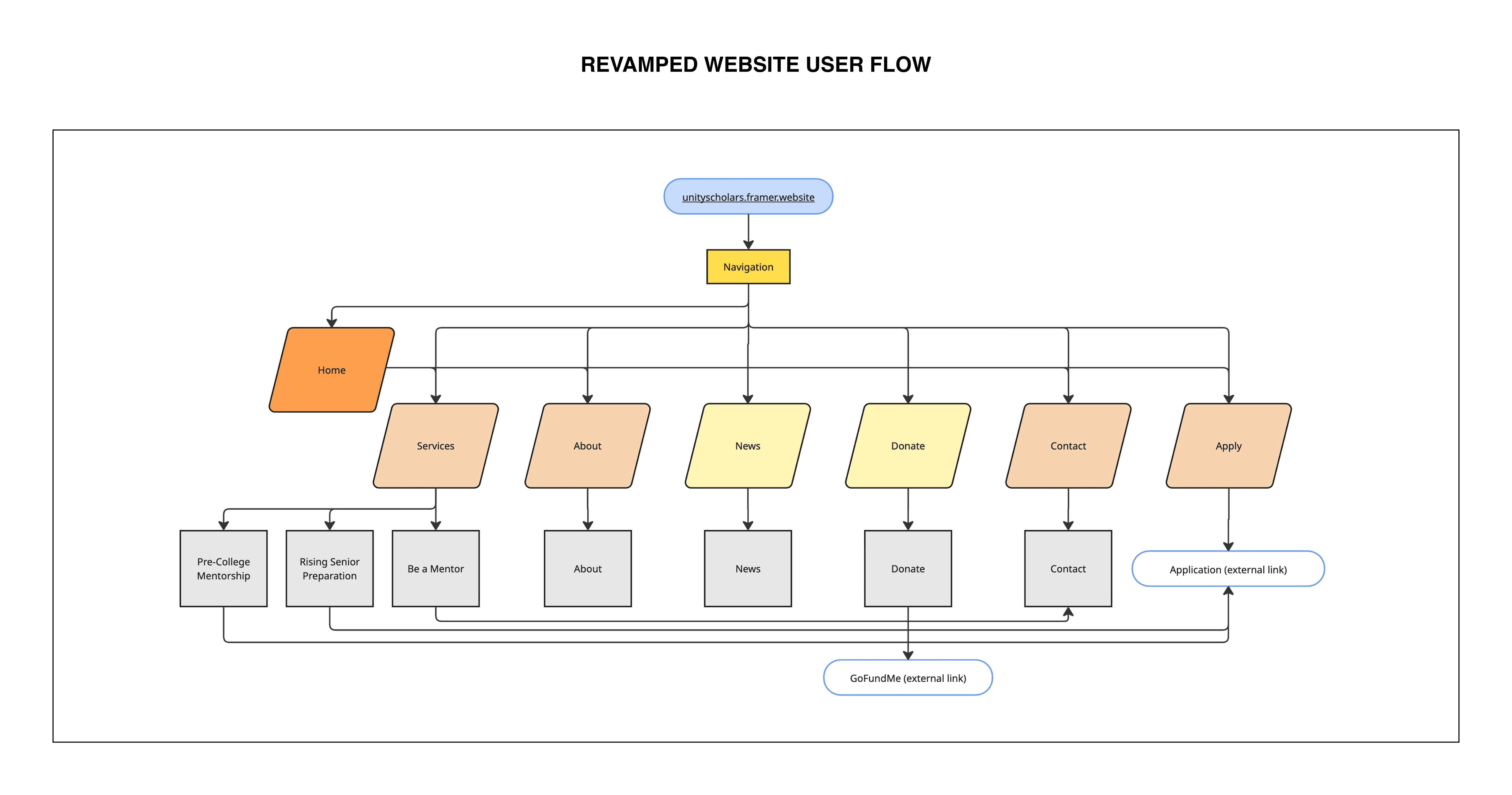
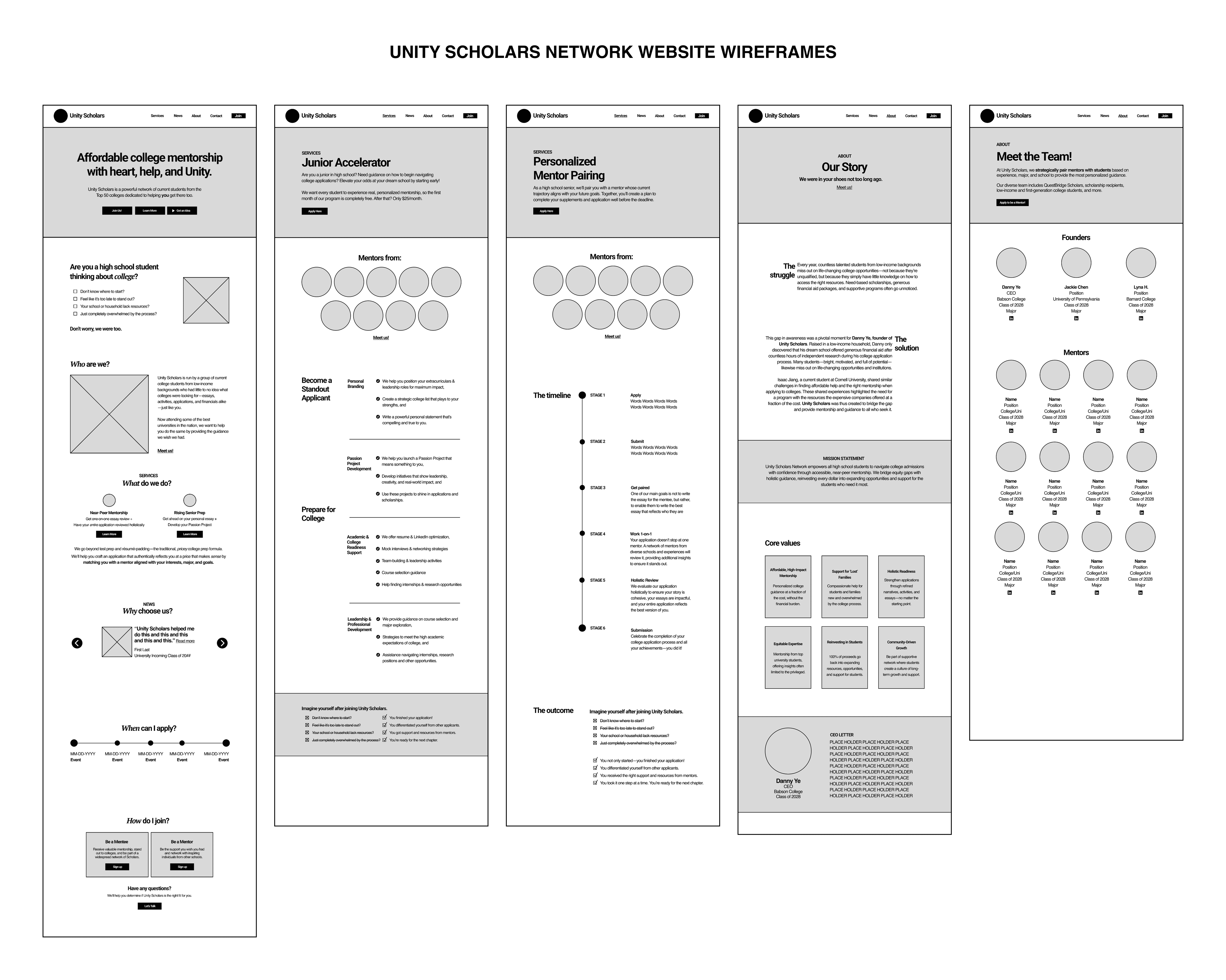
After evaluating the existing website, I identified the updated content structure using a user flow diagram and began wireframing the hierarchy for each page. This layout aimed to prioritize the organization's key points and seamlessly direct the main stakeholders to their respective pages.
Final Designs
Final Designs
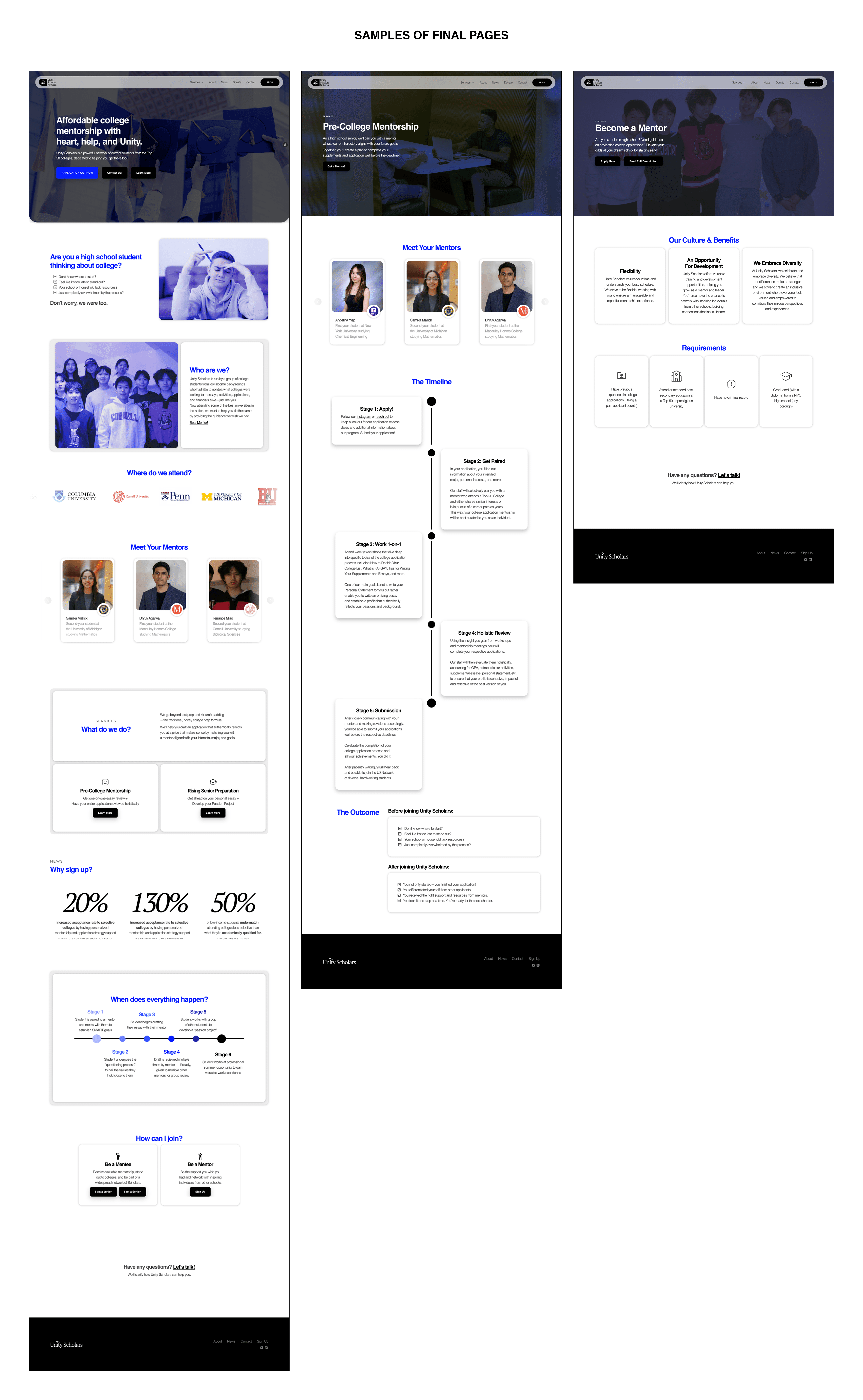
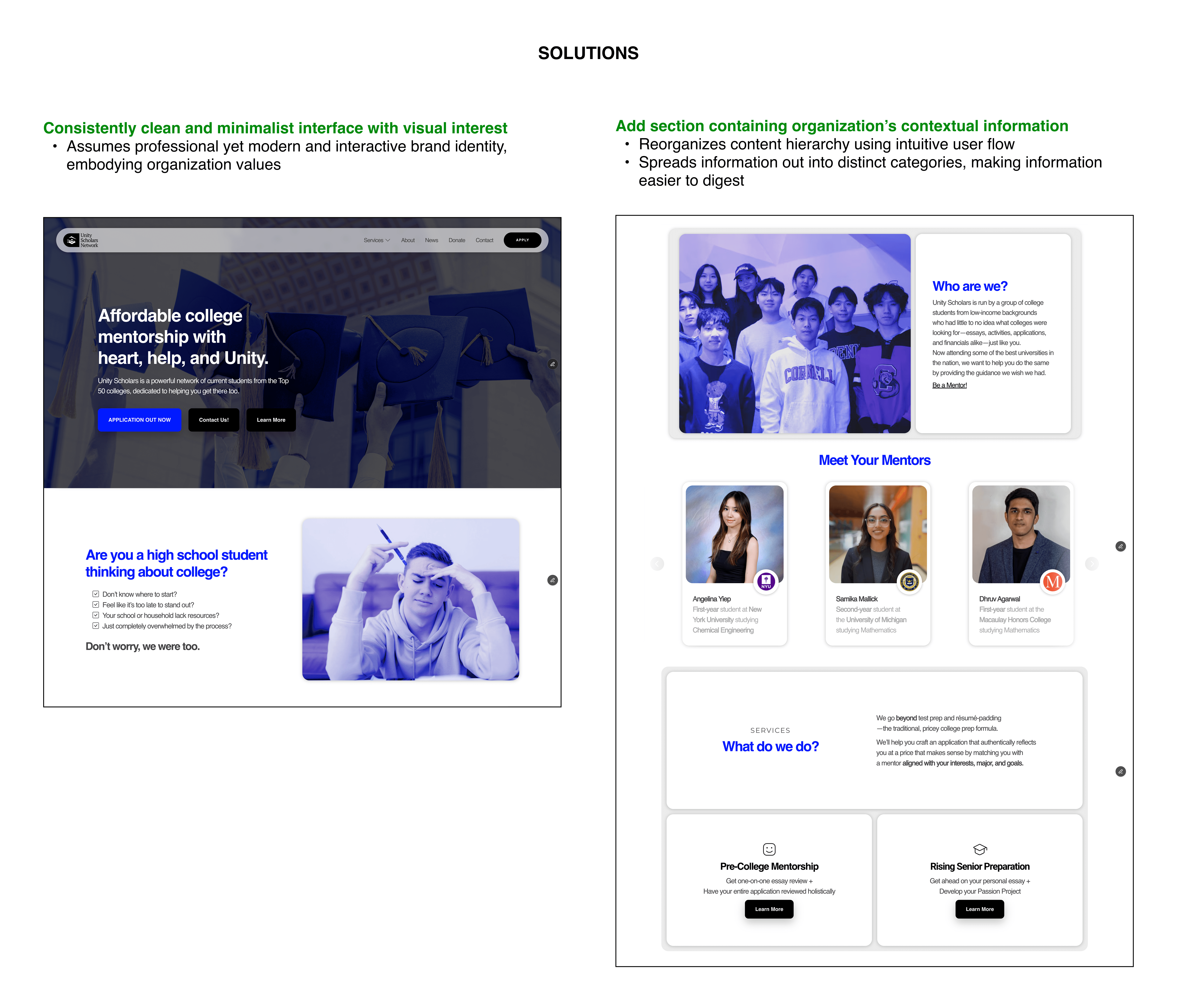
The final prototype consistently utilizes a renewed brand identity that is adequately designed for a younger audience. Adding stock images, regularly enforcing a vibrant accent color, and incorporating movement design via card carousels increases visual interest and provides engaging user interaction.
Additionally, each page is restructured to improve content hierarchy, distributing the density of content based on category and key points. This layout improves user navigation and clarifies vital information for efficient intake.
Product Demo
VIDEO DEMO
Interactive Prototype
Reflections
My Foot in the Door of Practical Design
Unity Scholars Network was my first full-scale project on Framer, which proved to be an incredibly steep yet gratifying learning curve. I independently taught myself how to use Framer in tandem with Figma, experimenting with different tools and workflows until I felt confident in creating an interactive, functional design. This process not only strengthened my adaptability but also pushed me to grow technically, professionally, and creatively as a designer.
Rebranding from Scratch
Rebranding an existing identity presented a unique creative challenge. Rather than starting from scratch, I worked to refine and expand on the CEO’s vision, ensuring the visual identity reflected the organization’s mission while staying scalable for growth. This taught me how to balance creative input with respect for an existing brand’s direction and values.
Working within a Network
Collaborating with a newer, fast-growing nonprofit organization was beyond insightful in ways I hadn’t anticipated. Because the executive team was still shaping its operations, I had the opportunity to interact with multiple departments, receive an abundance of constructive feedback, and understand the evolving needs of a young nonprofit. This cross-team collaboration broadened my perspective, showing me how design decisions impact every operational level of an organization, from program staff to mentors to prospective members.
Going Forward
I hope to continue working with this organization to improve the website’s user experience and adapt its interface as its program expands in size, needs, and operations. Going forward, I would like to conduct more research to better understand the needs of the organization’s high school applicants. Over a longer span of time, I aim to create a platform within the website to streamline the application process and information retrieval systems rather than rely on third-party forms and documents.