Making premier clean cooking technology accessible and trustworthy for families in Guatemala.
UI Designer for SolStove
Sep. 2025 – Dec. 2025
Figma
FigJam
Google Slides
User Research
UI Design
Hi-Fi Prototyping

Overview
Background
Indoor air pollution from uncontained biomass fires detrimentally impact millions of people every year.
Collectively, biomass cooking contributes 2–3% of global greenhouse gas emissions — a meaningful share of the climate crisis driven by some of the world's most under-resourced communities.
Women and children spend significant portions of their time and income sourcing fuel rather than pursuing education or economic opportunity.
SolStove aims to bridge this gap of sustainable cooking technology, access, and trust among residents in Guatemala.
Challenge
After working on clean cooking with families in Guatemala for four years, a SolStove founder realized that clean cooking solutions exist. Yet, they remain out of reach for the people who need them most.There is a need for a low-cost, culturally resonant clean cooking solution that is built to scale and designed to prove its impact over time.
Opportunity
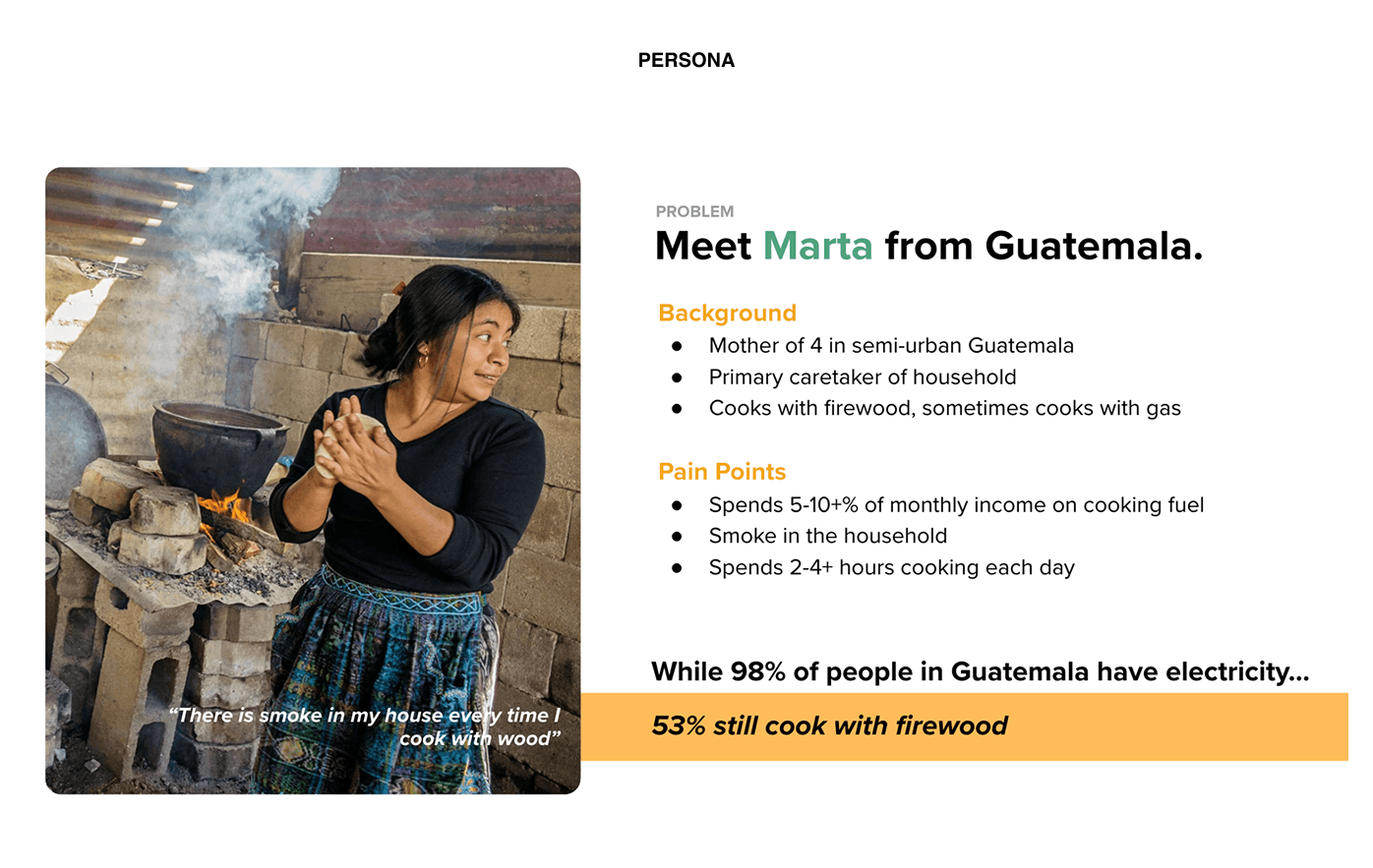
Because electric cooking appliances are largely new to the communities SolStove is being introduced to, the e-pairing app could not assume any baseline familiarity. Every interaction must be built around clarity to reduce first-use friction and build confidence through clear feedback for community members to gain gradual trust in the application, business model, and company values.
Research
User Research
60+ interviews and 90+ surveys with local families, clean cooking experts, and social entrepreneurs informed four structural barriers:
Cost: upfront prices for current solutions are incredibly high
Culture: existing products often fail to account for local cooking practices and preferences
Education: there's critically low awareness of clean cooking technology benefits
Scalability: distribution networks are limited and long-term impact is rarely tracked
Synthesis
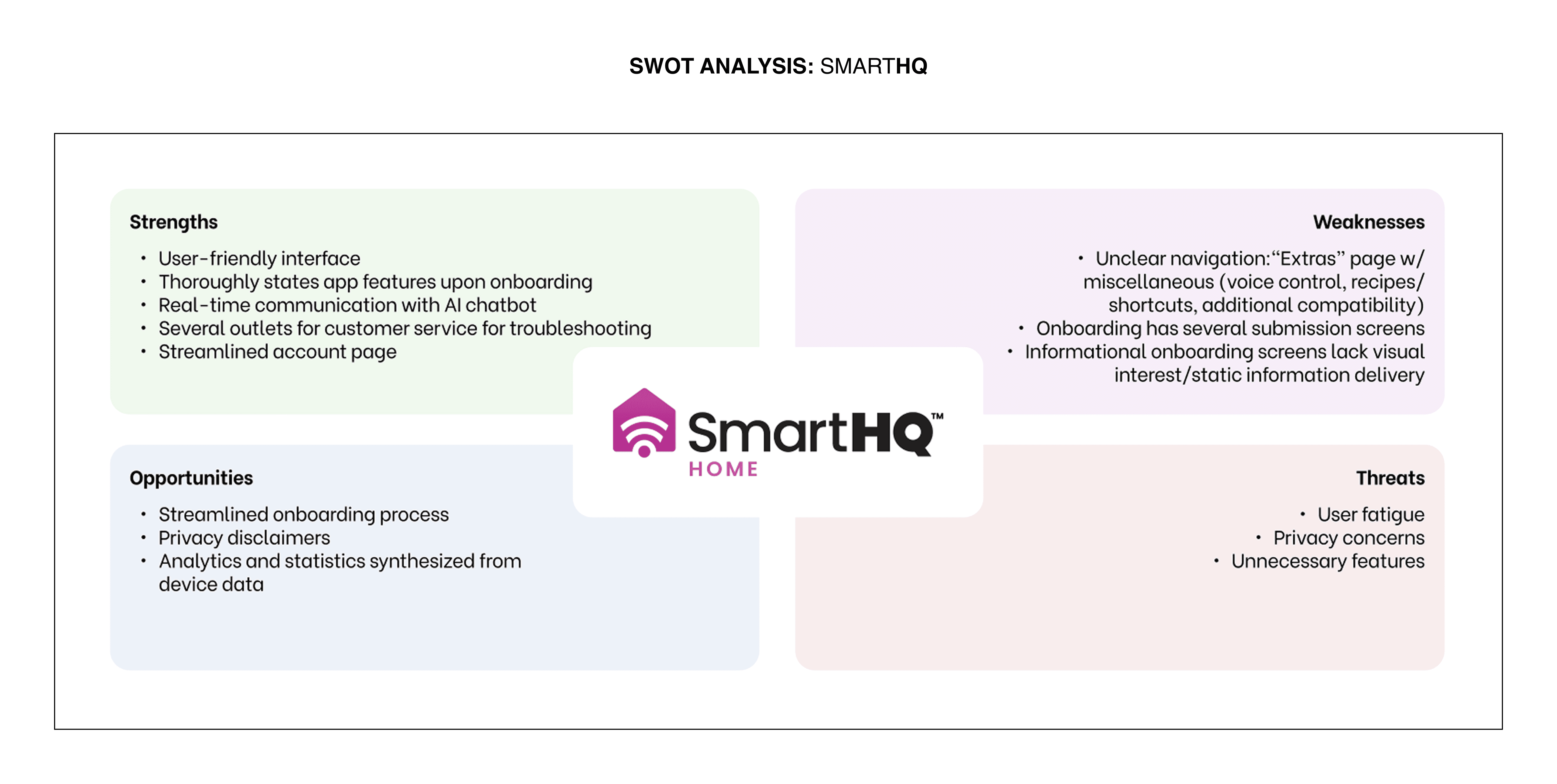
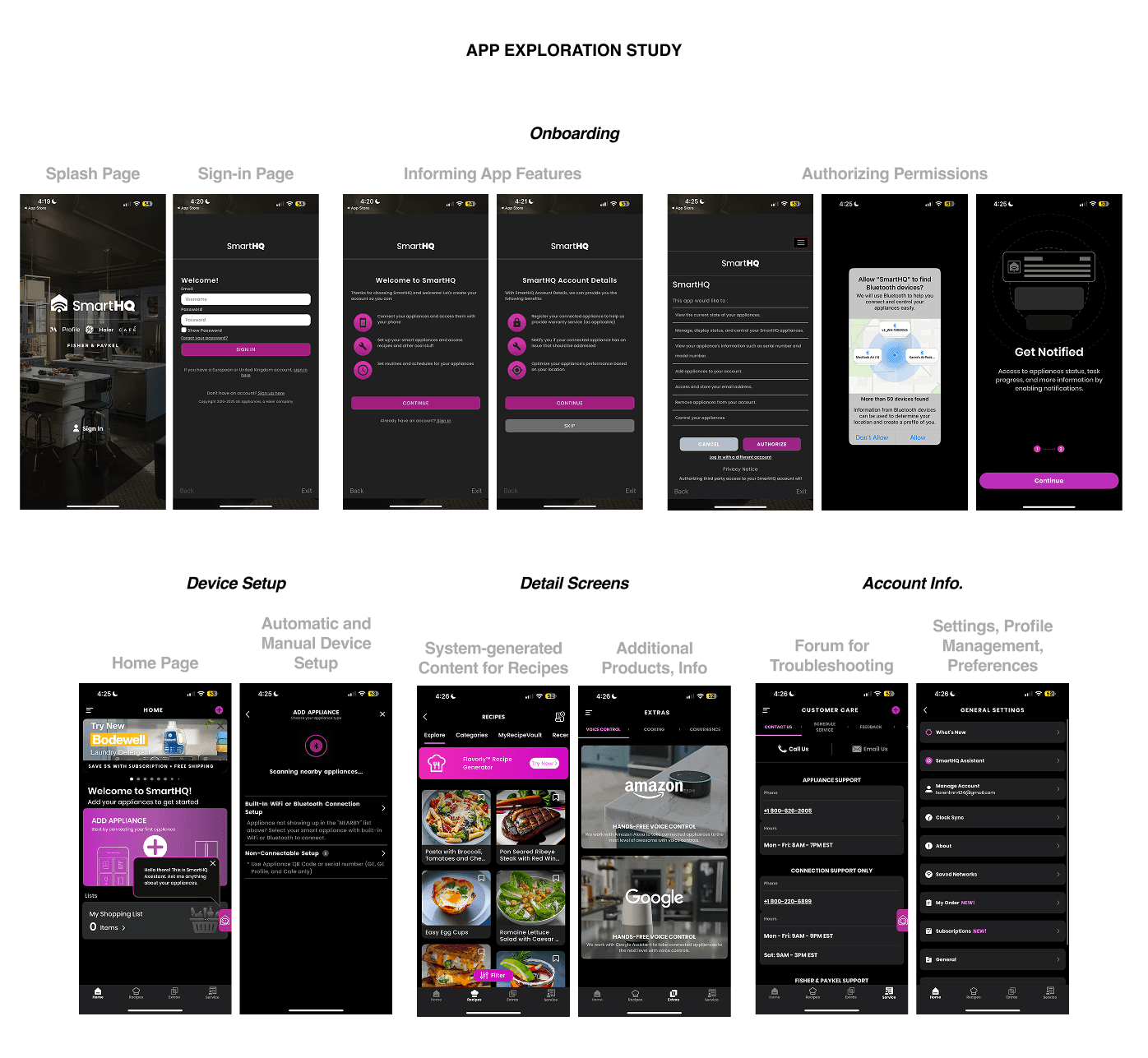
A SWOT analysis and screen exploration on SmartHQ (mobile application that serves as a centralized hub for remotely managing and monitoring Wi-Fi–enabled appliances) informed UX insights related to usability, navigation, and onboarding flows.
I paid particular attention to how effectively the interface would support users who are unfamiliar with device pairing and connected ecosystems, identifying key opportunities to improve learnability and accessibility.
Ideating
Ideation
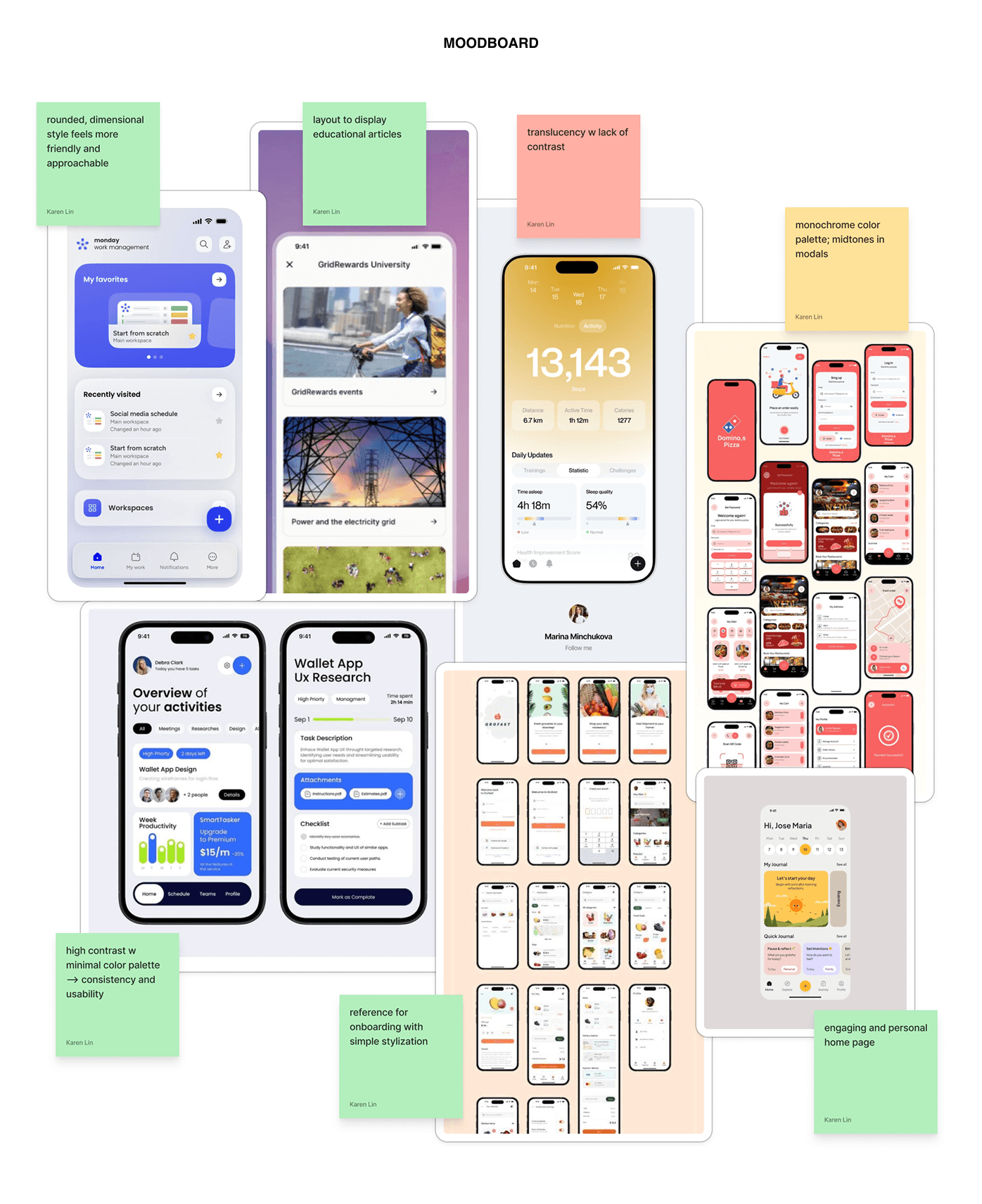
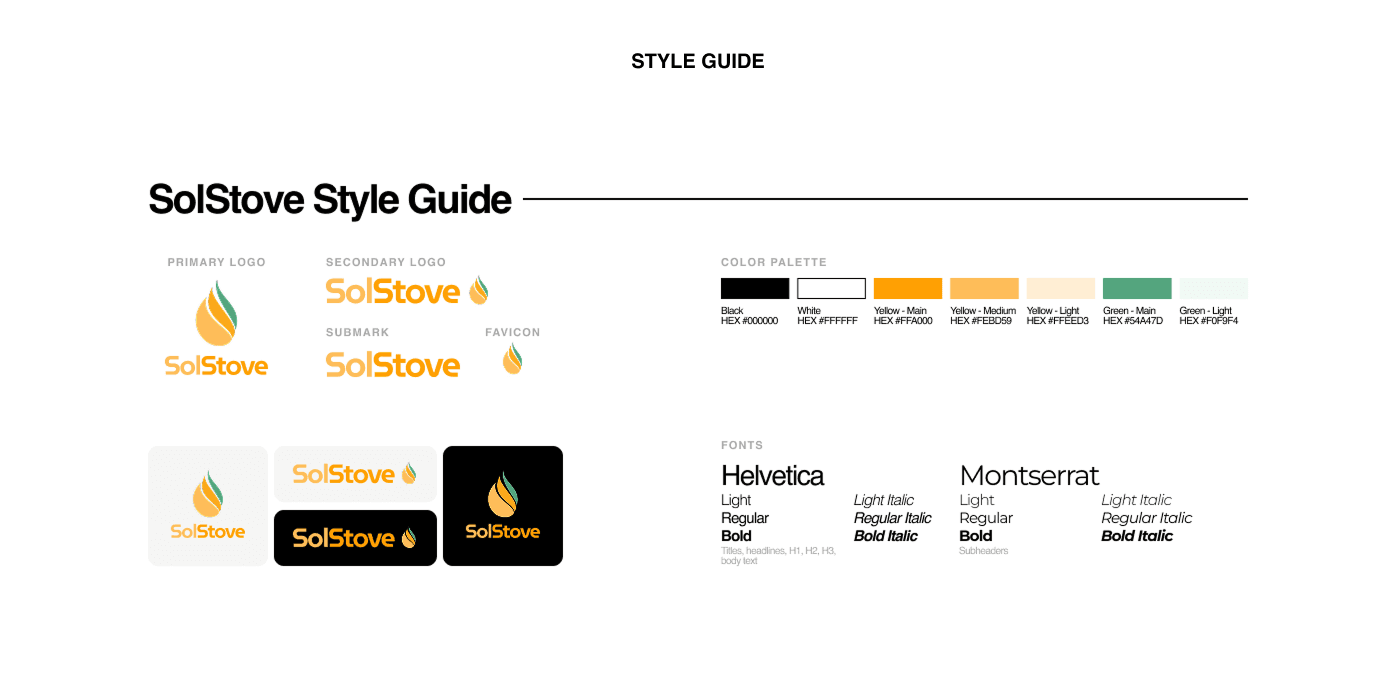
Beyond usability, I also evaluated a variety of interface styles, identifying features and aspects of existing and conceptual applications that would suit the SolStove brand identity and target audience.
I aimed to emulate styles that optimized organization — whether via thoughtful enclosure or intuitive content hierarchies — alongside welcoming visual elements — such as rounded containers and friendly voicing.
Final Designs
Final Designs
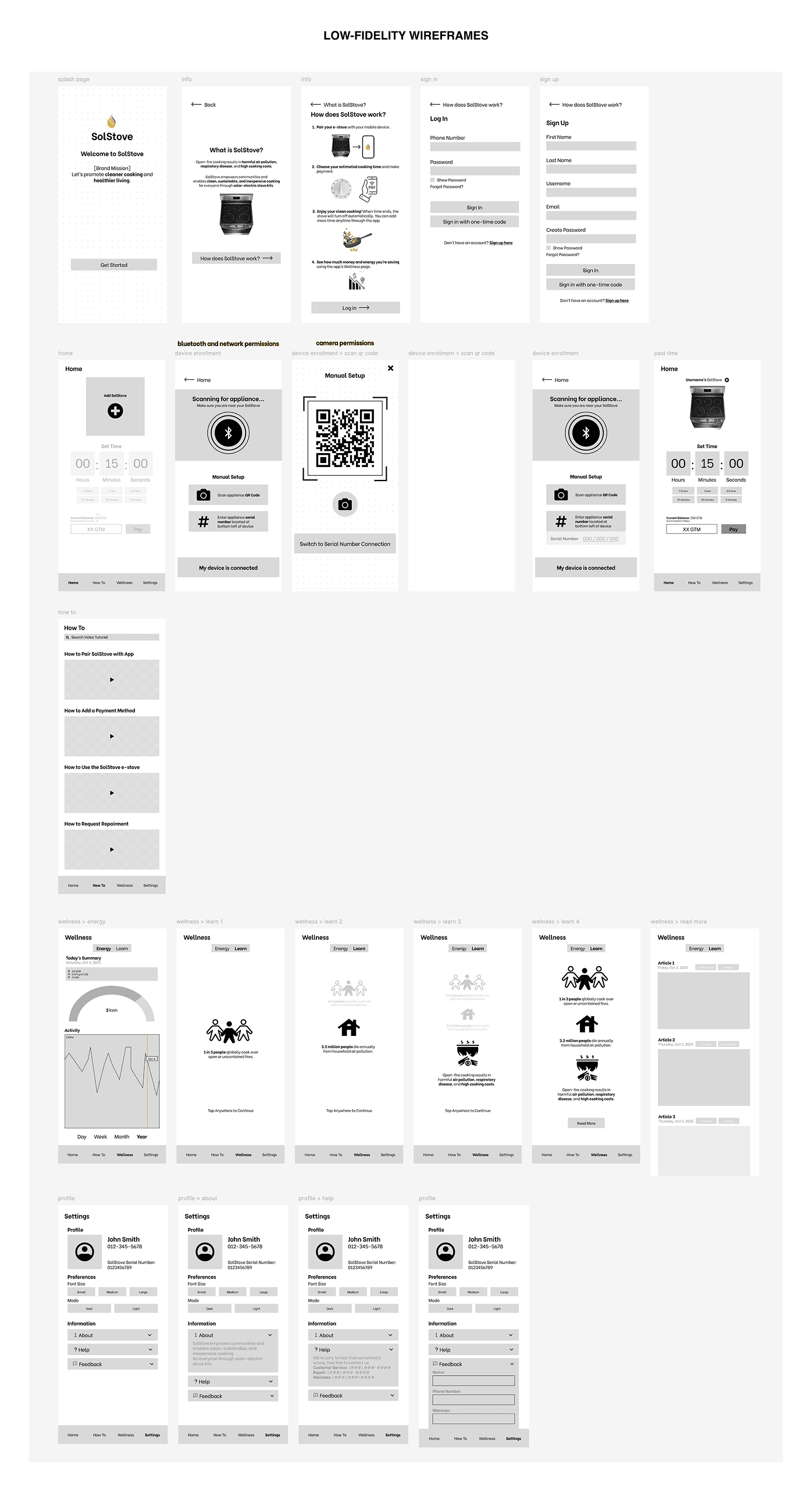
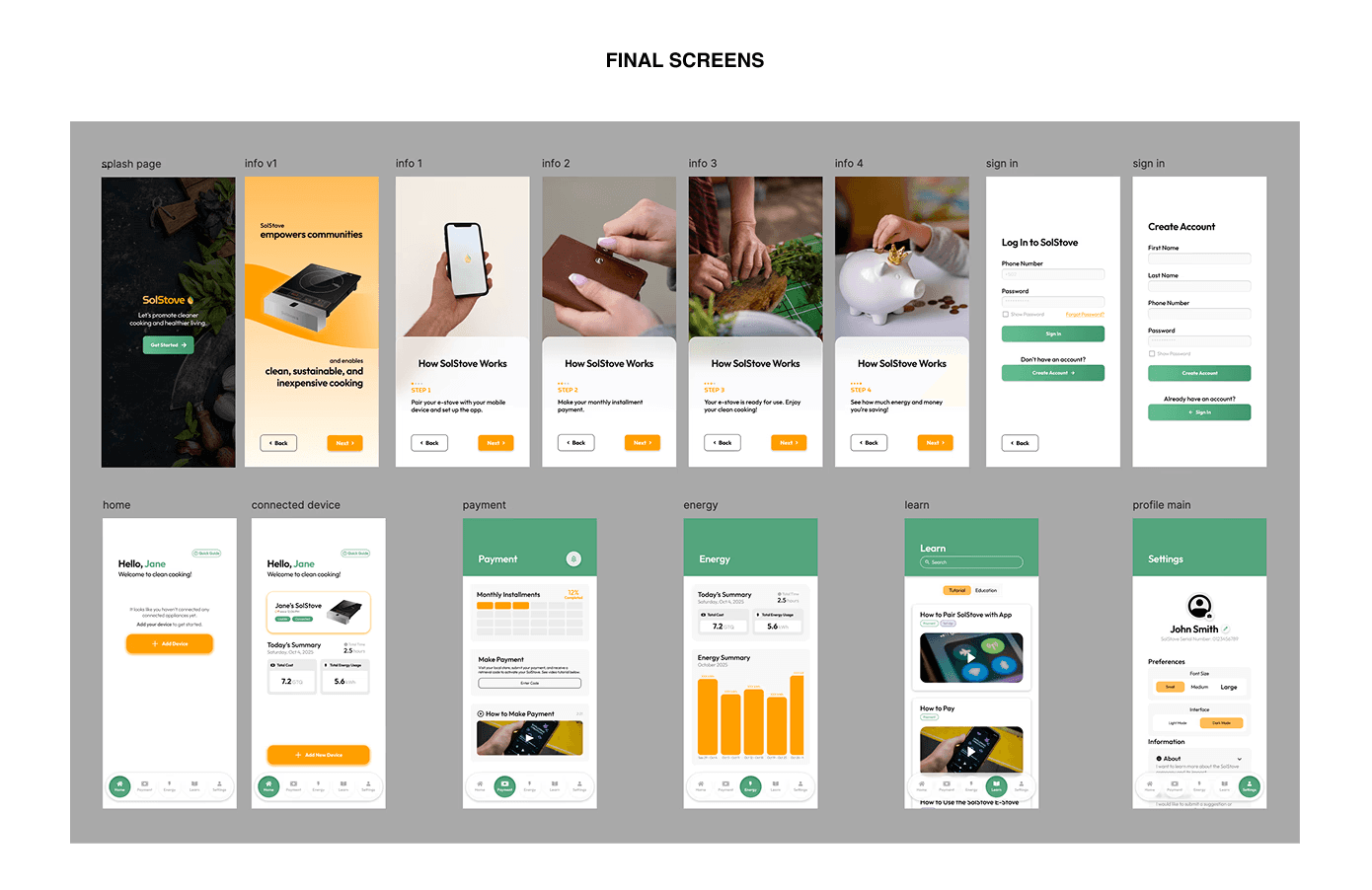
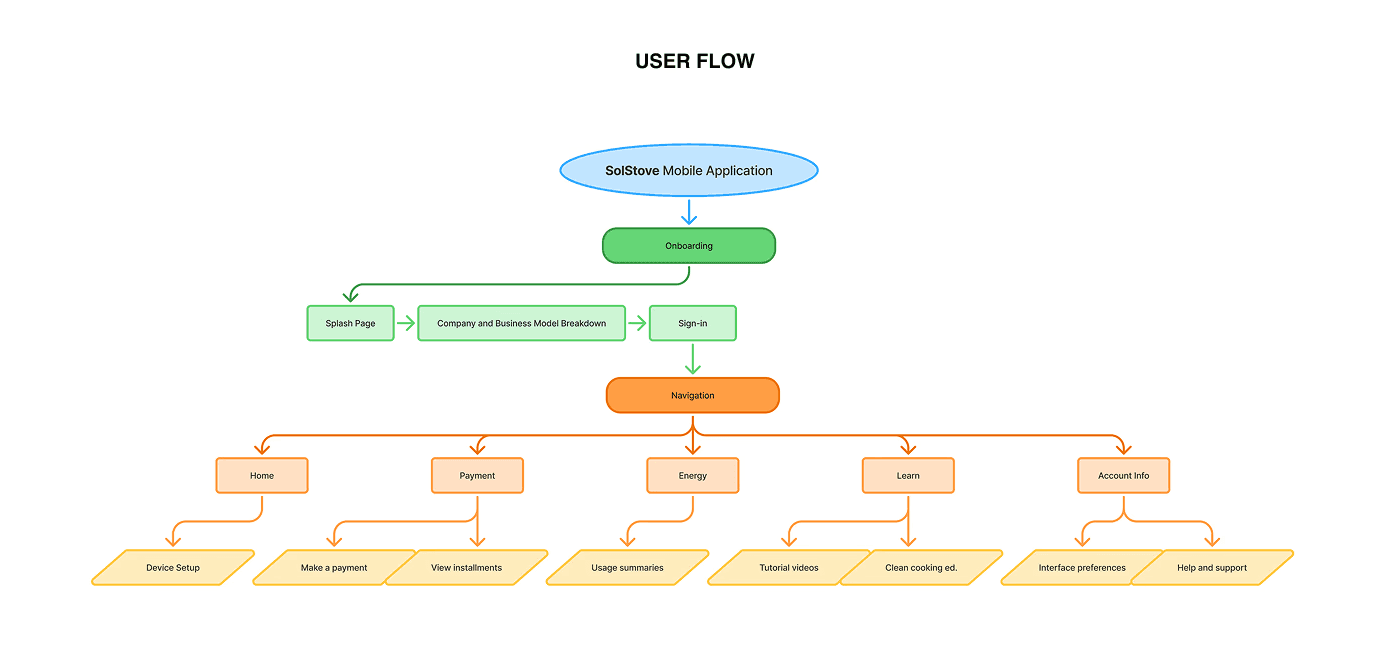
I created low- and mid-fidelity wireframes that encouraged an intuitive and largely sequential user flow. Between iterations, I received and implemented client feedback, then prototyped a high-fidelity design in preparation for development. The lasting user flow is as follows:
Beginning with a tutorial onboarding process, the user is then brought to a main home screen for device enrollment.
Upon successfully connecting their appliance, they can navigate between their payment installations, energy usage, and guiding content (tutorial videos or educational articles).
Users can find accessibility preferences and quickly access resources/additional information in their profile page.
Product Demo
VIDEO DEMO
Reflections
Designing for trust is as critical as designing for usability.
Even when solutions already exist, adoption depends on cultural alignment and perceived credibility. Building trust through clear communication, familiar patterns, and community-centered design is essential for real-world impact.
Accessibility goes beyond cost—it’s also about comprehension and context.
Barriers that SolStove faced were financial, as well as informational and behavioral. Simplifying complex concepts and meeting users where they are enabled more inclusive and actionable experiences.
Technology should empower rather than overwhelm.
By translating unfamiliar clean cooking technology into an intuitive, guided experience, the design supports confident decision-making and long-term adoption, demonstrating how thoughtful UX can drive meaningful social and environmental change.